Our customers know that OneTrust’s Third-Party Risk Management solution is an invaluable tool to efficiently manage their third-party risk posture. And now that has been validated.
OneTrust has been named a Leader in the 2026 Gartner Magic Quadrant for Third-Party Risk Management Tools for Assurance Leaders. For us, It’s an important milestone, but not a surprising one. We’ve been building toward this by focusing on a simple idea: third-party risk management should move at the speed of the business, not slow it down.
That belief shapes how we design, how we innovate, and how we help organizations operate with confidence in an increasingly complex risk landscape.
An Integrated Approach to Third-Party Risk
Third-party ecosystems are constantly evolving with external vendors now deeply embedded across operations, tech stacks, data flows, and customer experiences. Within most organizations, third parties have become the number one source of AI risk. But it’s not all bad news; AI is also accelerating organizations’ ability to onboard and assess third parties efficiently and effectively.
AI creates rapid growth and optimization opportunities — but risk exposure increases in kind.
According to our own research, 78% of enterprises source AI from third parties, while 55% of AI failures now come from third-party tools. An inherent paradox where fragmented processes and manual reviews struggle to keep pace with business demand.
We’re approaching this differently. Instead of treating third-party risk as a standalone workflow, we’ve built it as part of a connected, integrated risk platform prepared for the future-state of vendor networks. One that aligns privacy, security, data, and AI risk into a single operational model.
Because the real challenge isn’t identifying third-party risk. It’s understanding how risks impact everything else.
Built for Scale, Designed for Reality
Third-party risk programs often fail in execution, not intention. Too many programs rely on rigid questionnaires, static workflows, and manual follow-ups that create bottlenecks instead of clarity.
Our focus makes the process sophisticated and practical.
Our assessment experience is highly configurable, allowing organizations to tailor due diligence to their specific risk profile. Automated questionnaires and customizable templates ensure consistency without sacrificing flexibility. At the same time, continuous monitoring and integrated risk intelligence bring in signals from across the ecosystem, helping teams stay ahead of emerging risks instead of reacting to them.
This is what effective risk management looks like in practice. Not a set of policies and questionnaires, but a risk methodology that reflects your business’ day-to-day operations.
AI That Moves Work Forward, Fast
AI can re-define third-party risk management processes, but only when it’s applied intentionally.
We’ve embedded AI directly into the assessment workflow, significantly reducing manual effort. Our AI document scanning capability reduces assessment time by up to 65%.
Beyond that, AI agents can handle intake, screening, and risk tiering, while generating reports and surfacing insights in real time. Teams can even interact with the platform conversationally, asking questions about vendor risk, compliance posture, or outstanding issues.
This is where third-party risk management changes shape. Less time spent gathering information, more time actioning findings and treating risks.
From Visibility to Insight to Action
We feel being named a Leader reflects more than product capability. It reflects how organizations are using our platform to move from fragmented visibility to actionable intelligence.
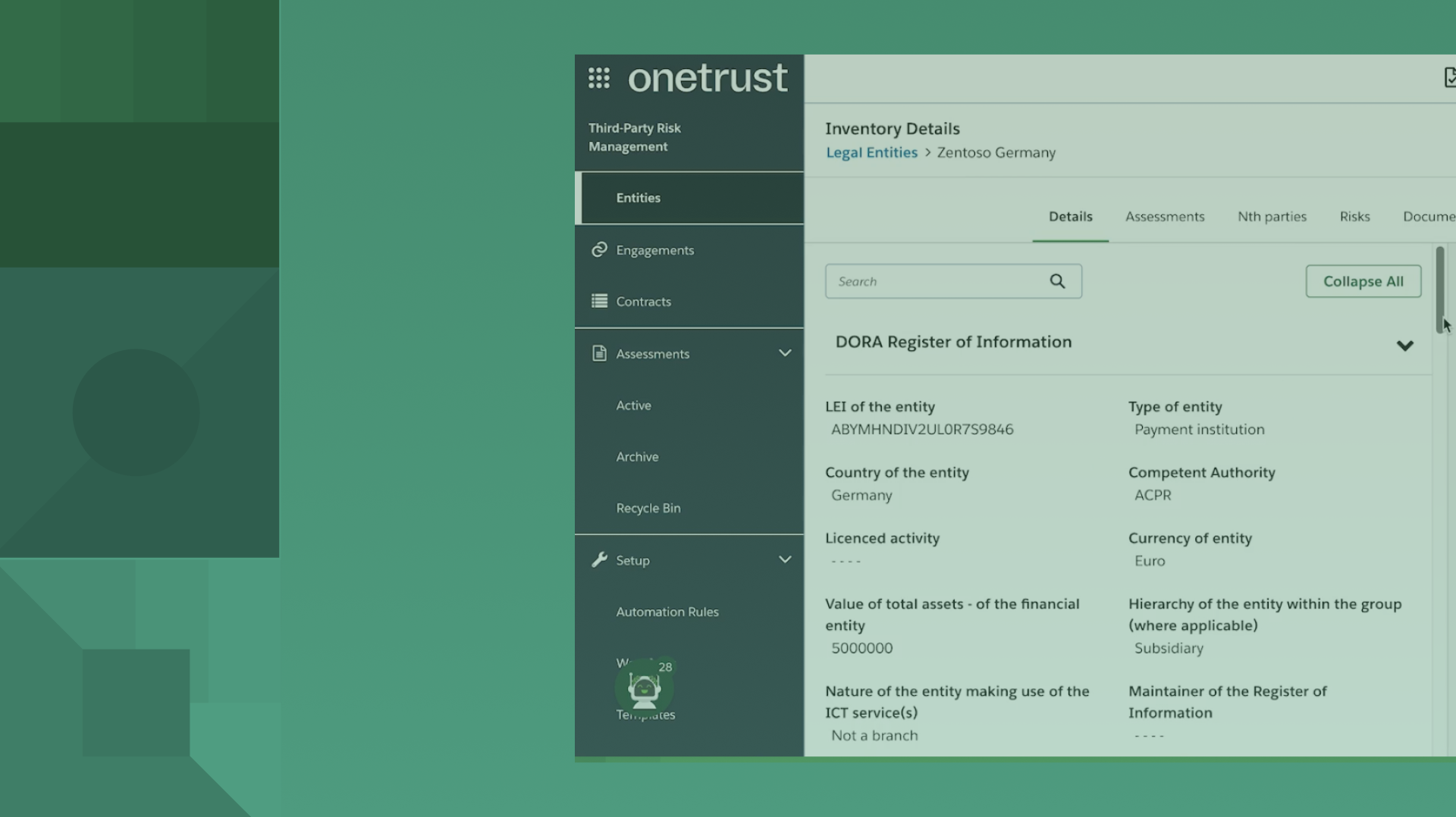
We see this in how risk is managed across the enterprise. A centralized risk register creates a single source of truth. Continuous monitoring ensures that risk posture is always current. Aggregated insights reveal how third-party risk impacts broader business initiatives.
This is critical in a world where risk doesn’t sit neatly in one domain.
Our platform is designed to connect these dots. To relate inventories, map frameworks, and configure workflows that mirror how teams actually collaborate. The result is a program that not only tracks risk, but informs strategy.
Innovation Is Earned in the Outcomes
We believe recognition from Gartner matters because it reflects how the market is evolving. But what matters more is what our customers can accomplish.
They’re onboarding vendors faster without increasing exposure. They’re reducing manual effort while improving audit readiness. They’re gaining real-time visibility into supply chain dependencies and identifying concentration and continuity risks before they become disruptions.
And they’re doing it at scale.
Today, organizations use OneTrust to manage their ever-growing network of vendors, process a constant influx of risk signals, and complete an increasing number of assessments every year. That scale is proof that modern third-party risk management can be both comprehensive and efficient.
The Next Phase of Third-Party Risk Management
We see this recognition as a continuation, not a conclusion.
We’re focused on deeper visibility into supply chains, more proactive identification of systemic risk, and greater automation across the lifecycle. Our customers need to move from periodic assessment to continuous, intelligence-driven risk management.
And it’s about ensuring that risk management safeguards transformation while helping to scale innovation.
We believe that risk management should enable the business, not constrain it. Being named a Leader reinforces that approach. More importantly, it validates the direction we’re heading.
Because in a high-risk and AI-disrupted world, the organizations that succeed won’t be the ones that avoid risk.
They’ll be the ones that understand it — and take on appropriate risks with confidence.
Learn more about OneTrust’s Third-Party Risk Management solution by booking a demo here.
Gartner does not endorse any company, vendor, product or service depicted in its publications, and does not advise technology users to select only those vendors with the highest ratings or other designation. Gartner publications consist of the opinions of Gartner’s business and technology insights organization and should not be construed as statements of fact. Gartner disclaims all warranties, expressed or implied, with respect to this publication, including any warranties of merchantability or fitness for a particular purpose. Gartner and Magic Quadrant are trademarks of Gartner, Inc., and/or its affiliates.